Why Ubud’s monkeys feel like a must-do
I hesitated at the idea of “a monkey attraction” in the middle of Ubud—partly because I wanted the classic close-up photo, and partly because I didn’t want my first wildlife moment in Bali to turn into a scramble for my sunglasses. The pull is real: the monkeys are right there, un-caged, and the setting makes it feel less like a zoo and more like you’ve stepped into their neighborhood. That immediacy is also the catch—these aren’t tame performers, and your odds of a perfect shot rise and fall with how calm (and crowded) the paths are.
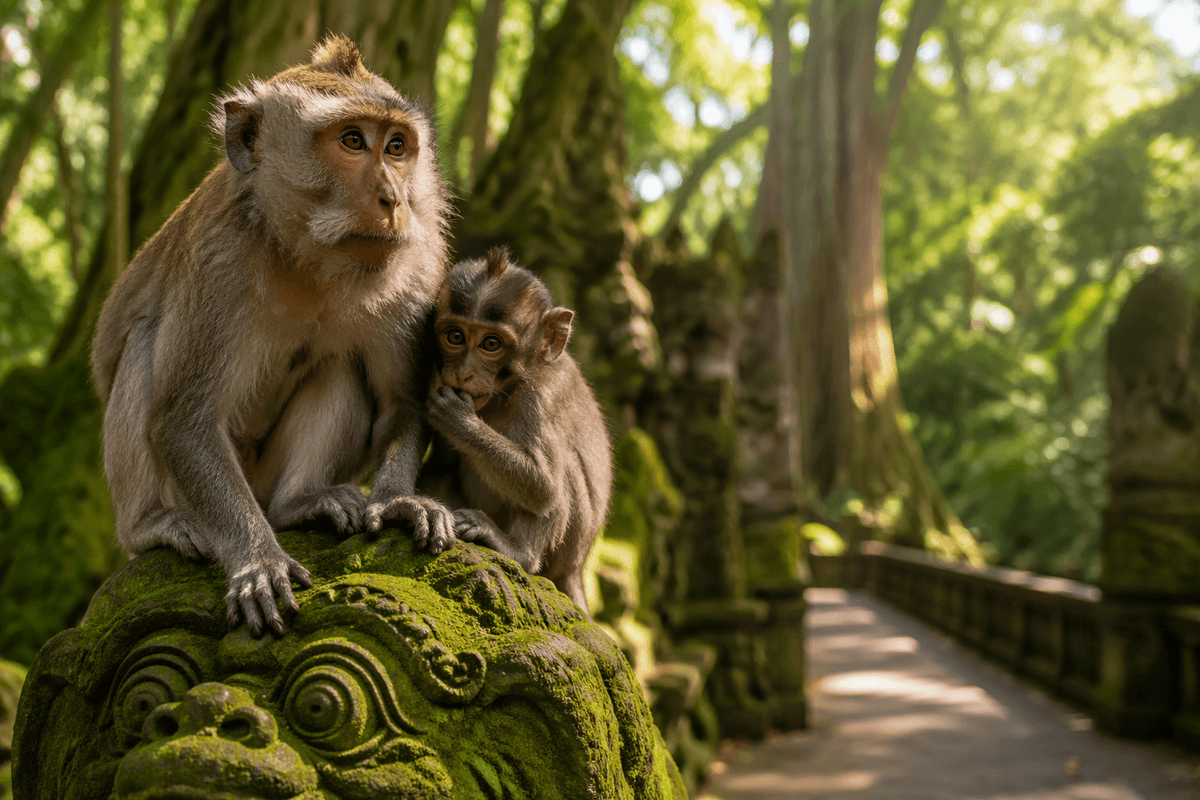
If you’ve got only 2–4 days in Ubud, the Monkey Forest can feel like an easy “yes” because it’s quick to reach and emotionally high-reward: you’ll likely see playful grooming, tiny family drama, and at least one bold teenager testing humans for snacks. But it’s not a guaranteed gentle interaction, and “playing” is mostly a human fantasy—what you’re actually deciding is whether you’re comfortable being close to opportunistic animals in a busy place, and whether you can follow the rules even when the photo moment tempts you to bend them.
What Monkey Forest is really like on arrival
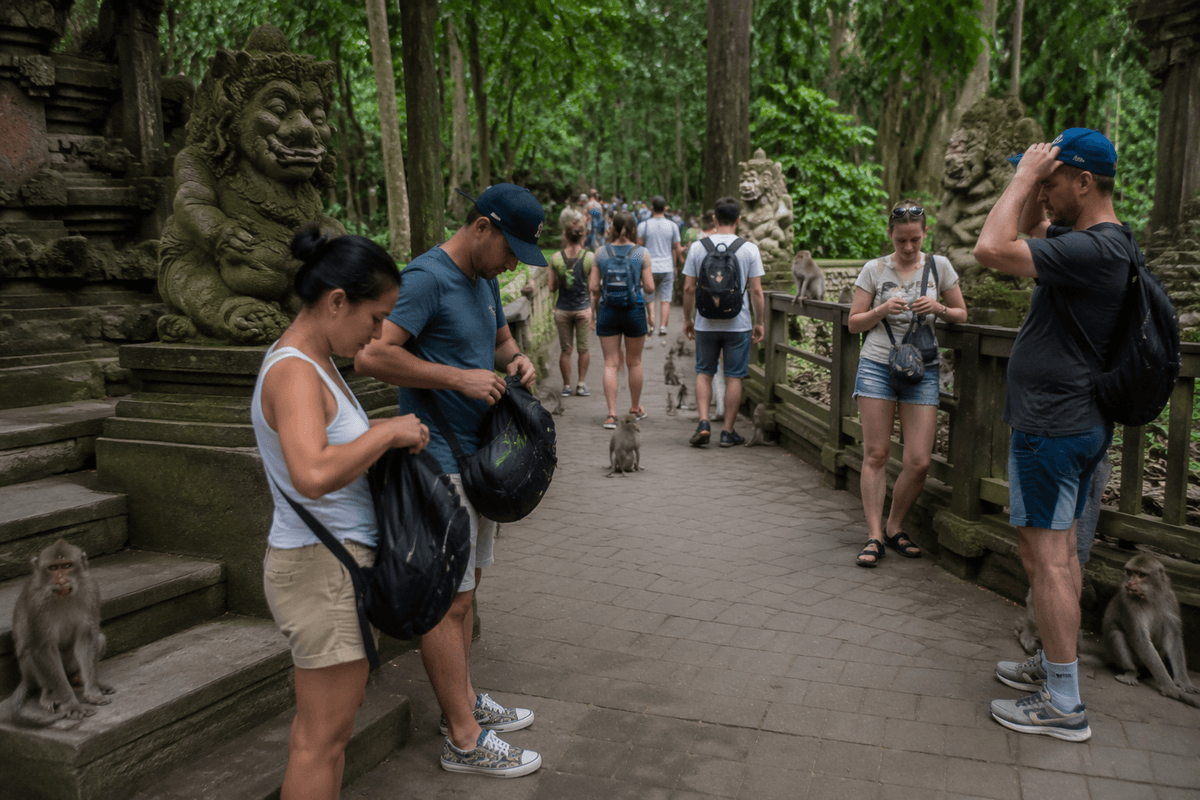
The first thing I noticed at the entrance wasn’t a monkey—it was everyone doing a quick self-audit: zipping bags, sliding phones deeper into pockets, taking off hats. That’s a useful signal, because the arrival experience is less “stroll into a serene sanctuary” and more “enter a lively, managed space where animals and tourists are negotiating the same narrow paths.” The ticketing and signage make it feel orderly, but once you step inside, the pace is set by clusters of people stopping suddenly for photos, and by monkeys that have clearly learned what human hesitation looks like.
You’ll likely see monkeys almost immediately, but the closest moments aren’t always the most comfortable. The first troop areas can be busy, and crowds make the monkeys more watchful and reactive—especially when someone rustles a plastic bag or holds a bottle out like an offering. If you’re hoping for a calm, eye-level portrait, you often get better odds a few minutes deeper in, after the initial bottleneck thins out.
Also: it’s not one continuous “cute” scene. There are stretches where nothing happens, then sudden bursts—chasing, squabbling, a monkey hopping onto a railing beside you. That unpredictability is part of the charm, but it’s also where people get flustered and make fast, sloppy choices with their hands and belongings.
Playing vs provoking: rules for safe interaction
The closest call I saw happened in a half-second: someone crouched to “meet a monkey at eye level,” smiled, and reached out like they would to a dog. The monkey read it as pressure, not friendliness—ears back, quick lunge, and the person jerked away with that embarrassed laugh that turns into panic when a second monkey joins in. If you want this to stay fun, treat the interaction like you’re a predictable piece of furniture: calm, upright, and boring. The more you try to “play,” the more you look like a moving target with possible food.
The rules that actually matter are less about politeness and more about removing triggers. Don’t touch them, don’t block their path, and don’t hover over babies (that’s when adults get sharp). Keep your hands close to your body—wide gestures look like grabs—and if a monkey steps onto the railing near you, resist the impulse to lean in for a selfie. Backing up slowly works; sudden retreats or squeals tend to raise the energy of the whole cluster, including the monkeys that weren’t interested a second ago.
Photo-wise, you’ll get better results by waiting for behavior that’s already happening—grooming, lounging, or slow walks—rather than trying to “pose” them with eye contact or sound. If one approaches you, stay still, look slightly past them, and let them be the one to disengage. You’ll miss a few dramatic close-ups this way, but you also dramatically lower the odds of a scratch, a grabbed phone, or that awful moment where you realize you were the reason an animal got stressed.
What to wear, carry, and leave behind
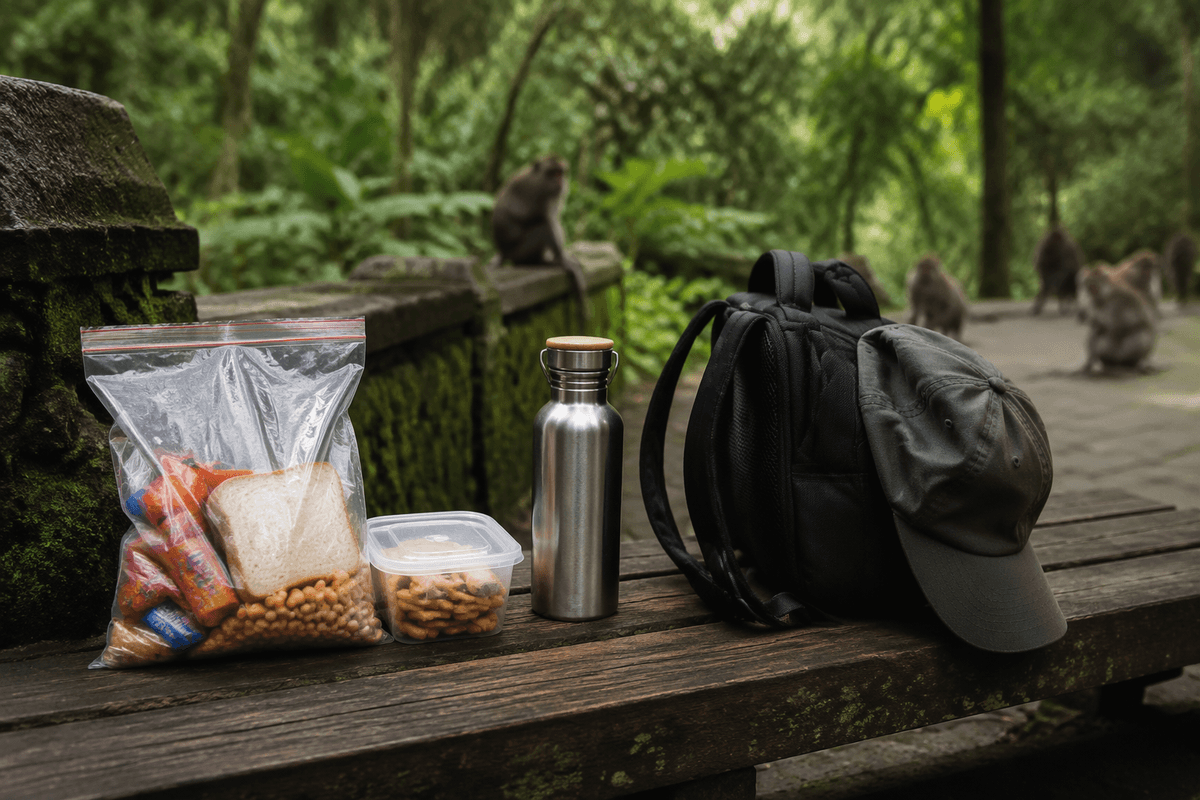
I made the mistake of arriving with “easy access” everything—sunglasses on my head, a loose tote, and a phone half-out because I wanted the first monkey I saw. It worked for about thirty seconds, until a juvenile started tracking the shiny bits like it was a menu. The simplest way to keep the visit calm is to look boring: closed-toe shoes (the paths can be slick and uneven), no dangling jewelry, and nothing perched on top of your head. If you love a hat, wear one you can tuck away quickly, because adjusting it mid-path is exactly the kind of fidgeting that draws attention.
Carry less than you think you need. A zippered crossbody worn in front beats a backpack you can’t see, and skip plastic bags entirely—crinkling sounds read like snacks. Water is useful in the heat, but don’t carry it in your hand like a prop; stash it fully inside a bag or wait until you’re well away from any troop to drink. If you’re bringing a camera, use a wrist/neck strap and keep lens changes to a minimum—fumbling with gear in a crowd is when people drop things, and dropped things become monkey projects.
Leave food, gum, and anything strongly scented behind (or sealed and buried deep), even if you swear you won’t feed them. The moment a monkey thinks you’ve got something, the interaction stops being “wildlife moment” and turns into negotiation, and you don’t have the leverage you think you do.
Best times, photos, and respectful viewing spots
I learned quickly that timing in Monkey Forest matters more than camera skill. Midday, the paths can turn into stop-start traffic, and that’s when monkeys get boxed in by people and everyone’s nerves rise at once—bad for behavior, worse for photos. If you can swing it, go early while it’s cooler and the light is softer; you’ll still see plenty of action, but you’re less likely to be shooting over raised phones or squeezing past a stalled selfie line.
For photos that feel close without being pushy, look for “pause points” rather than hotspots: railings where monkeys naturally sit, wider junctions where you can stand off to the side, and any spot where you can give them a clear exit path. I got my best frames by staying one step back from the cluster and waiting for grooming or lounging to settle in—less dramatic than a lunge, but it reads as calmer, more wild. If a monkey is moving toward you, don’t step forward to meet it; hold position, shoot from chest level, and let it pass.
One practical constraint: respectful distance often means accepting smaller subjects. A short zoom or portrait mode helps, but the real upgrade is patience—wait for them to come into your space on their terms, and you’ll leave with expressions that look curious instead of defensive (and a lot fewer “oops” moments with grabbed gear).
Leaving with stories—not injuries or guilt
Near the exit, I caught myself doing one last “phone check” before I even checked my photos—because the best ending here is boring in the moment: no staff attention, no sudden chase, no awkward apology because you got too close for a baby shot. If you’ve stayed calm and kept your hands to yourself, the visit tends to taper off gently. If you’ve been edging into their space for “just one more” close-up, that’s when the final five minutes can get messy, especially in the chokier paths where people stop without warning.
My clean rule for leaving with a good story is to stop while you’re ahead: once you’ve got a couple of frames you actually like, shift into observer mode and let the last stretch be a walk, not a hunt. It’s a small self-control tax, but it’s what keeps this from becoming a souvenir of stress for you—or a learned habit of harassment for them. On a short Ubud stay, that’s what makes Monkey Forest feel worth the time: not the closest possible photo, but the feeling you didn’t have to take anything from the animals to get a real moment.