Why ube feels like a dessert, not a nutrient
The first thing most people notice with ube isn’t “vegetable”—it’s the soft vanilla-like aroma and that bright purple color that shows up in ice cream, halaya, and cakes. Even before the first bite, your brain tends to file it under “treat,” which can make it easy to forget there’s an actual root behind the flavor.
Part of the confusion is that ube rarely shows up on its own. In everyday cooking, it’s often blended, sweetened, and enriched until it’s smooth and spoonable, which changes how filling it feels. A whole yam asks for chewing and comes with fiber that slows things down a bit; a sweet ube spread goes down fast and can leave you looking for “just a little more” soon after.
So when people talk about ube “benefits,” it may help to separate the yam from the vehicle. If your portion looks more like frosting than a side dish, the sugar and fat may end up steering the energy and fullness story more than the ube itself.
Purple pigments that act like antioxidant support
Sometimes the purple feels like the whole point—almost like it must mean “healthy.” But color can be a noisy signal. In ube, that deep violet comes from plant pigments (often anthocyanins) that, in some situations, act like antioxidant support in the background rather than a noticeable “boost” you can feel after a snack.
Those pigments tend to travel with the parts of the yam that are still behaving like a yam: real pieces, some texture, and a slower bite. When ube becomes a glossy jam, a whipped ice cream base, or a butter-rich filling, the purple may still look dramatic while the overall effect on your body is driven more by added sugar and fat—faster eating, quicker energy spikes, and less staying power.
It can help to treat the color as a bonus, not proof. If you notice the purple treat leaves you hungry again or sleepy an hour later, the pigments may be there, but they’re not the main driver of how it’s landing.
Fiber that changes fullness and gut rhythm
You might notice it most the next morning, not at dessert time: a steadier bathroom routine, or the opposite—more gas than you expected from something that tasted like candy. That’s one of the telltale signs that ube is still “behaving like a root” in your meal, because fiber tends to show up in gut rhythm before it shows up as a headline benefit.
In a more whole form, ube’s fiber adds bulk and a bit of viscosity as it mixes with fluid, which can slow how quickly the stomach empties and make fullness feel more settled rather than sharp and short-lived. It also gives gut bacteria something to work on, which can support regularity for some people while creating bloating for others—especially if the portion jumps suddenly.
Once ube is strained, whipped, or turned into a silky halaya with lots of sugar and fat, that fiber effect can shrink. The spoonful goes down fast, and fullness becomes easier to overshoot or miss entirely.
Carbohydrates that can be steadier than sweets
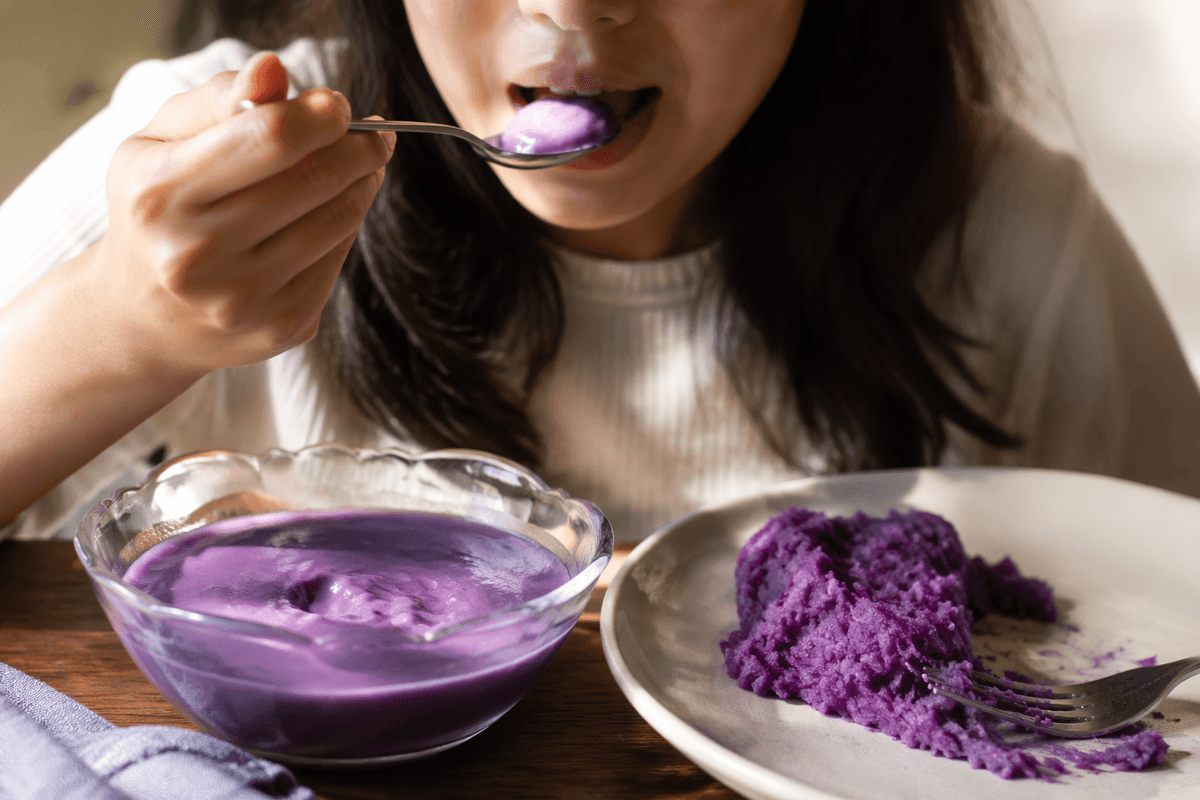
It’s easy to misread the energy you get from ube as “the same as candy,” especially when you taste it in ice cream or a thick, sweet halaya. But the carbohydrate in the yam itself often lands differently. When ube is cooked and eaten with some texture—mashed with a fork, cubed in a bowl, or folded into a less-sweet batter—it tends to arrive with water and fiber that can make the rise in energy feel slower and less dramatic.
That steadier feeling can fade when the carb is paired with a lot of added sugar, because now you’re stacking fast-digesting sweetness on top of what was a slower root. The result may be a quick “bright” burst that drops into fogginess or snack-hunting later. If you notice you’re hungry again soon after a purple treat, it may be the added sugars—more than the ube—setting the pace.
One practical cue is how quickly you eat it. A chewy, mildly sweet ube portion gives your fullness signals time to catch up; a silky, heavily sweetened version can disappear before your body has much to say about it.
Potassium-forward nutrition and heart comfort patterns
Sometimes it’s a subtle “tight” feeling that shows up after a salty dinner—your rings feel snug, your mouth feels dry, and dessert sounds oddly appealing. In that moment, ube can look like a harmless way to end the meal, but how it’s prepared changes what it’s doing.
As a root, ube is naturally potassium-forward, and potassium is one of the minerals your body uses to balance fluid and counter some of sodium’s pull. In some people, meals that include potassium-rich foods can feel a little “calmer” afterward—less puffy, less thirsty, less on-edge—though it’s rarely dramatic and it isn’t consistent day to day.
Many ube treats arrive with extra sodium (baked goods), plus lots of sugar and fat. If you notice a sweet ube snack leaves you thirstier or more weighed down, that comfort pattern may be getting drowned out by the dessert ingredients, not the purple yam.
Micronutrients that back immune and skin resilience
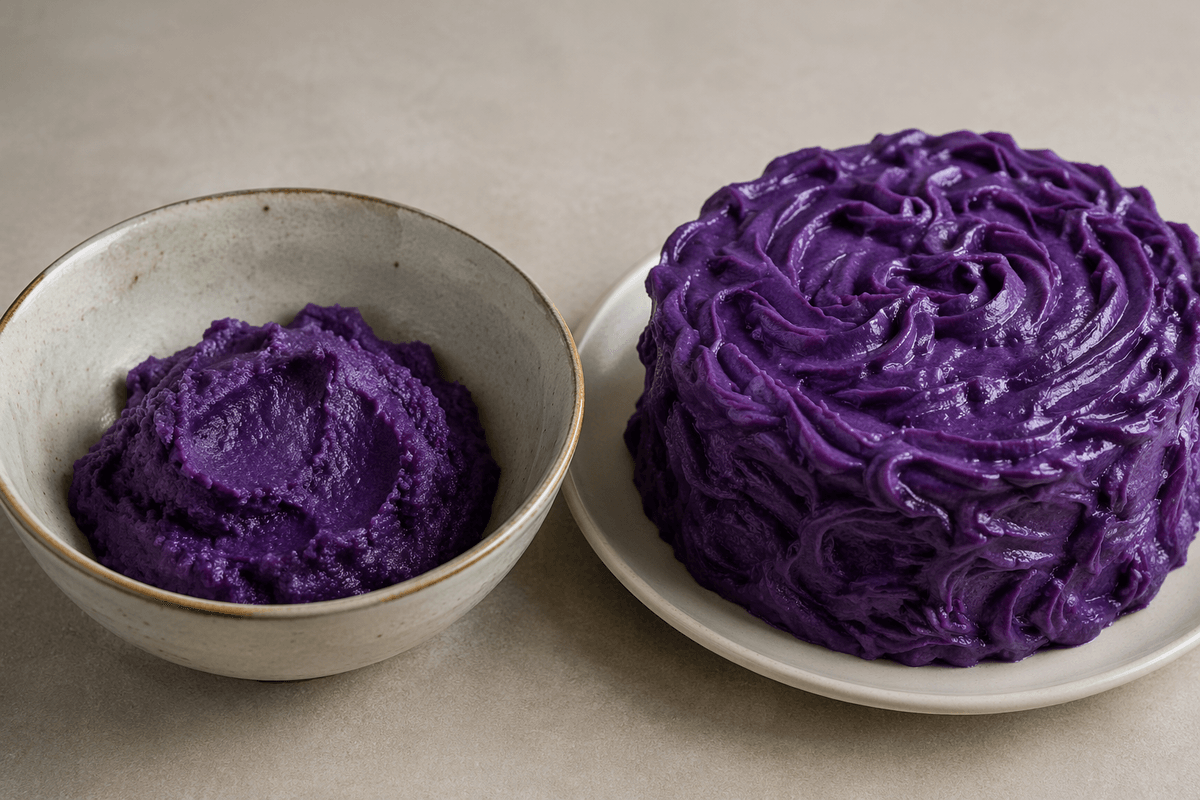
It often shows up when you’re cleaning the bowl: that faint purple stain on the spoon, and the quiet assumption that the color must be doing something for you. With ube, the “something” is usually less about a dramatic feeling and more about small micronutrients riding along with the root—bits that support everyday maintenance like skin turnover and immune function, even if you can’t point to a single moment where you feel the difference.
Those micronutrients tend to stay relevant when ube is still treated like food: cooked, mashed, or folded into a lightly sweet recipe where you’re actually eating a portion of yam. When ube turns into a sugar-and-fat-forward vehicle, your body may respond more to the dessert mechanics—blood-sugar swings, sleepier energy, and a quicker return of hunger—than to the background nutrients.
A useful reality check is what your portion resembles. If it eats like frosting or candy, the “skin and immune” story may be mostly wishful thinking, even if the flavor still comes from ube.
When a healthy root becomes a sugar-fat delivery
It’s usually the second spoonful that gives it away: the flavor is richer, sweeter, and somehow less satisfying at the same time. Ube halaya, ice cream, and butter-heavy fillings can feel “light” because they’re smooth and easy to swallow, but they’re often dense in sugar and fat—meaning the dessert can deliver a lot of energy before your fullness signals catch up.
When that happens, the yam’s natural advantages get harder to notice. Fiber works best when it slows eating and digestion; added sugar speeds the whole experience up, and added fat can make it easy to keep going because the mouthfeel stays pleasant. The result may be a quick lift followed by a dip—sleepiness, snacky restlessness, or that odd feeling of being both full and still looking for something else.
A practical way to separate “ube” from “vehicle” is to watch the after-effect, not the label. If a portion leaves you steady for a while, ube may still be acting like a root in your day. If you’re rummaging for more food soon after, it’s often the sugar-fat delivery system doing most of the talking.