Mauritius isn’t small—you’ll waste days if you guess
I hesitated at the rental-car counter at SSR with my phone showing a “45-minute” drive to Black River Gorges—then the agent pointed out the afternoon school-run traffic and the rain already rolling over the central plateau. On the map, the island looks like you can zigzag casually. In real time, a simple inland detour can eat half a day if you hit the wrong hour.
Mauritius isn’t huge, but it’s wide in the ways that matter: slow coastal towns, winding mountain roads, and bottlenecks near Port Louis and the busier resort strips. The trade-off is blunt—either you cluster days by region (fewer long transfers, more unrushed meals and hikes) or you keep chasing “top 10” spots across the island and spend your best light in a car. If you’re here for food plus nature, the inland plateau and southwest reward early starts; they don’t reward spontaneous mid-morning departures from the far north.
For a 7-day couple, I’d treat the island like three zones with different friction levels: north (easy beach days, quick wins like Grand Baie/Pereybère, but crowded evenings), west/southwest (best for hikes, viewpoints, and wilder coastline—also the most timing-sensitive), and the center/Port Louis (markets, street food, museums—great on weekdays, tiring in midday heat). Self-drive buys flexibility for sunrise hikes and roadside snacks; taxis/tours remove stress but lock you into someone else’s clock.
If you have 3, 5, or 7 days
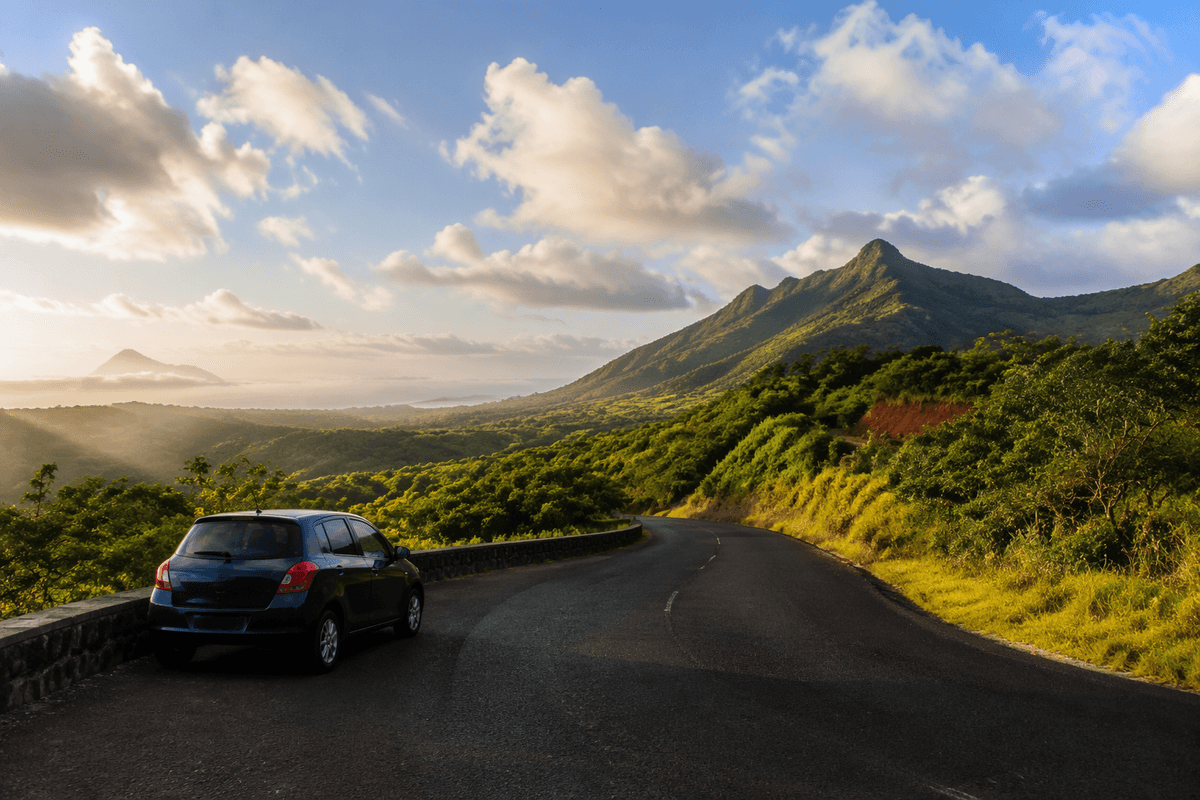
At 7:10 a.m., I watched the café in Flic en Flac fill up while Google swore Chamarel was “only” 55 minutes away, and I could feel the day narrowing. Leaving after 9 meant the viewpoints got hazy and the parking got petty; leaving before 8 meant skipping the slow breakfast you came for. That push-pull—comfort versus momentum—shows up fast once you start counting days.
If you have 3 days, don’t pretend you’ll “do the whole island.” Pick one coast base (north for easy evenings and beach swims, west for sunsets and quicker access to the southwest) and spend one morning inland: Black River Gorges or Chamarel works if you commit early, then reward yourselves with a proper lunch (expect roughly $25–$50 for two at a solid, non-resort spot; street food far less). Port Louis’ Central Market is a better short-trip culture hit than a museum crawl, but it’s sweaty by late morning and not relaxing if you hate crowds.
With 5 days, the trade-off shifts: you can add a second zone without living in transit. I’d do two nights north (Grand Baie/Pereybère for dinners and casual beach time) and three nights west/southwest for hikes, viewpoints, and a rougher coastline; it suits couples who like mornings. With 7, you can keep that two-base rhythm and still “waste” an afternoon on purpose—spa, lagoon cruise, or a long street-food loop—because you’re not trying to stack Chamarel, a hike, and Port Louis into one fragile day. For transport, self-drive wins if you want sunrise flexibility; tours/taxis win if you’d rather pay ~$60–$120 per day for less decision fatigue.
For food lovers beyond resort buffets
I paused outside Port Louis Central Market with a sweaty bag of litchis in one hand and my card in the other, realizing the stall only took cash and the ATM line was moving like airport security. Ten minutes later I was eating a hot dholl puri on the curb, which was delicious in a way no buffet “theme night” ever is, but also not the moment for white linen or lingering. If you like food with texture and noise, this is your trade-off: more flavor, less comfort.
Port Louis is the highest-return zone for street food, but it only works if you time it. Go early on a weekday (think 8:30–11:00 a.m.) when the crowd flow is manageable and the heat hasn’t turned the market into a sauna; by midday it’s more endurance than fun. You’ll find dholl puri, farata/roti, boulettes (dumplings), and gateaux piments for a few dollars each—cheap compared to resort lunches, yet the “cost” is planning: cash, queues, and keeping an eye on your phone and bag.
For a calmer, couple-friendly food day, Mahebourg (southeast) and the south coast feel slower than Grand Baie, with seafood spots that suit an unhurried lunch before a beach walk. The limitation is transport: it’s easy to taxi there, harder to string together multiple snack stops without paying for waiting time. A rental car makes the improvised roadside bakery detour possible, but only if you’re okay skipping wine at lunch and navigating back before dusk.
Nature that’s worth the early start
At 6:05 a.m., the kettle clicked off while it was still dark outside, and I had that small, annoying question: hike shoes now, or let the lagoon win. The forecast showed “passing showers” over the plateau, which sounds harmless until you realize it usually means slick trails and clouded viewpoints by late morning. Leaving early felt like paying an upfront cost—sleep, a slower breakfast, the easy romance of a lazy start.
Black River Gorges is the best-value nature morning because it scales to your energy: a short lookout-and-walk works if you’re tired, while longer trails reward people who like earning lunch. The limitation is visibility—start early if you care about layered views rather than “green fog,” and expect trails to feel more humid than the coast. Chamarel (waterfall + viewpoints) is more photo-friendly but also more schedule-dependent: arrive before the tour buses and you’ll get space; arrive late and you’ll spend time parking and waiting for angles that don’t include someone’s selfie stick.
If you’re debating car versus tours, this is the section where self-drive usually wins. Le Morne at sunrise (even from lower slopes if you’re not doing the full hike) is calmer and cooler, but it doesn’t suit a driver who hates narrow roads or a couple that wants cocktails at lunch. A tour is smoother for “see a lot” days, yet it turns nature into a checklist—fine for first-timers, less satisfying if you’re chasing quiet more than landmarks.
Culture you can actually feel
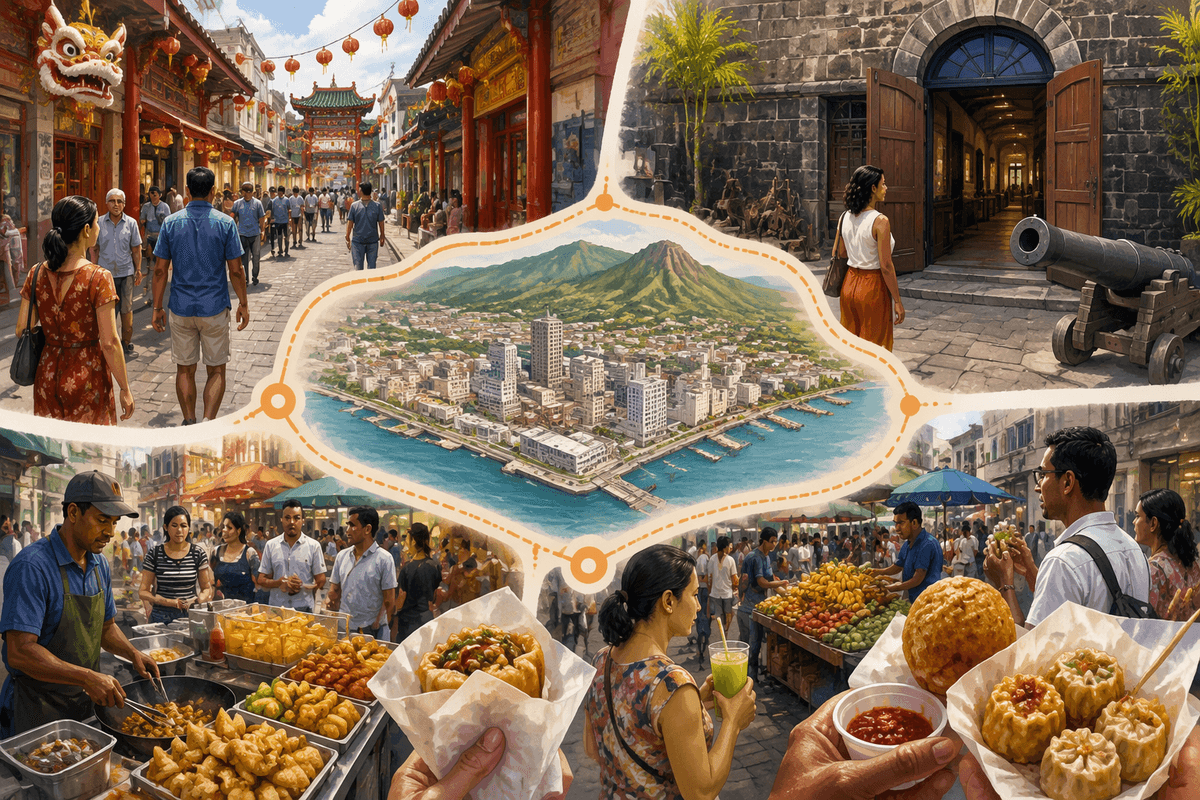
At 9:42 a.m. in Chinatown, Port Louis, I stopped under a faded red lantern because the sidewalk narrowed into a squeeze of office workers, tourists, and a delivery guy balancing crates. I’d planned to “wander,” but the reality was more like pedestrian Tetris: you either commit to the flow or you get pinned against a shop window. It was a useful correction—culture here isn’t a scenic backdrop, it’s a working weekday.
If you want the highest signal with the least logistics, pair Port Louis for a half-day (Chinatown lanes, small museums, a snack loop) with a single, specific inland stop. Grand Bassin (Ganga Talao) feels genuinely lived-in on a calm morning, but it’s not a “pop in for five minutes” site—budget 1.5–2.5 hours including the drive and a slow walk, and avoid arriving midday when heat and coach groups flatten the mood. A taxi day works, but waiting time adds up; self-drive is cleaner if you’re stacking stops and don’t want to negotiate every detour.
For couples who like a quieter, curated version of culture, the tea/colonial circuit in the south-central highlands (Bois Chéri-style tastings, nearby viewpoints, a simple lunch) trades intensity for ease—more “scheduled,” less street-level friction. Expect roughly $20–$60 for two depending on tastings and lunch, plus transport. If that sounds tame, lean the other way: time Port Louis early, accept the crowding, and let the island feel a bit messy on purpose.
My ideal first-timer game plan
On night one, I stared at two open tabs—an SUV quote that jumped once insurance was added, and a WhatsApp thread with a driver who “could do tomorrow” but wanted the itinerary before confirming. It was 10:18 p.m., the kind of planning moment that feels small until you realize your next seven mornings depend on it. The detail that mattered wasn’t price; it was whether we wanted sunrise freedom or someone else’s clock.
If you’re mid-range and loosely planned, I’d run a two-base week: 2 nights north (Pereybère/Grand Baie) for easy dinners and a soft landing, then 5 nights west/southwest (Flic en Flac or near Le Morne) to cut friction on hikes and viewpoints. Keep Port Louis as a weekday morning mission (aim 8:30–11:00), then escape before the heat and crowd flow turn it into a test of patience; budget a few dollars per snack, but bring cash and tolerance for queues.
My cleanest “worth it” loop is: one early Black River Gorges morning (short walk or longer trail depending on legs), one Chamarel/tea highlands day for views plus a slower lunch ($25–$60 for two), one Grand Bassin morning if you want lived-in culture without performing it for Instagram, and one intentionally lazy lagoon day so you’re not hiking on pure fatigue. For transport, rent a small car for 3–4 days if you’re comfortable driving and want dawn starts; otherwise book 1–2 structured tour/driver days (~$60–$120/day) and let the rest be coastal. If you’re still undecided, pick the option that makes you leave the hotel earlier twice—those are the days Mauritius quietly pays you back.