Two weeks in Zanzibar hinges on your base
I stared at the island on my phone at 7:10 p.m., thumb hovering over “Book,” and the distances looked harmless. Stone Town to Nungwi was just a thin line on the map, and Paje didn’t seem much farther. Then I remembered the last taxi quote I’d seen—cash, no meter, and suddenly “one quick move” felt like a whole afternoon disappearing.
For two weeks, your base choices matter more than your daily itinerary because Zanzibar punishes inefficient hops: traffic bottlenecks near Stone Town, slower roads once you cut inland, and that creeping fatigue when you’re packing every three nights. A split that works for most first-timers on a mid-budget pace is two main beach bases plus a short Stone Town start: 2–3 nights in Stone Town (culture, food, spice day), then 5–7 nights on one coast, then 4–6 on the other. It’s not “less authentic” to stay put—it’s buying back snorkel mornings and non-rushed sunsets.
North (Nungwi/Kendwa) is the easier, lower-stress beach base: tides are less dramatic, swimming is more consistent, and it’s better if you hate scheduling your day around water levels. The east (Paje/Jambiani) wins on vibe and lagoon beauty, but the trade-off is timing—some low tides turn “quick dips” into long walks over seagrass. If you’re only picking one beach base, choose north for convenience; choose east if you’re happy to plan beach time like you’d plan a tour.
Stone Town and spice backroads (Days 1–3)

I hesitated at the hotel door the first morning when the alley outside filled with scooters and handcarts, and my Google pin kept drifting like it was seasick. The air was already sticky, my bag strap was cutting into my shoulder, and I realized “ten minutes on the map” in Stone Town can mean twenty if you miss one turn. It felt less like a neighborhood grid and more like a moving hallway system that doesn’t care what time your tour pickup is.
Give Stone Town 2–3 nights, but don’t over-schedule it like a checklist city. Day 1 works best as a soft landing: airport transfer, a slow wander to get your bearings, then Forodhani Gardens at dusk when the heat eases and the food stalls feel lively instead of relentless. It’s a trade-off—yes, you’re still “in transit mode,” but you’re also learning how long it takes to walk anywhere (and how quickly you’ll get tired doing it in sandals).
For Day 2, a guided walking tour pays off more than you’d think because it replaces wrong turns with context, and it’s easier than negotiating taxis through pinch-point traffic. Day 3 is your spice-and-backroads day: go early, choose a smaller group if you can, and accept that the spice farm can feel performative while the drive inland feels genuinely interesting. If you’re the type who needs a beach immediately, you’ll itch here; if you can handle one “culture-first” block, you’ll leave Stone Town ready to coast-hop without second-guessing every transfer.
East Coast beaches and tides (Days 4–7)
At 6:22 a.m. in Jambiani, I stood on the sand with a coffee that was still too hot, watching the water line sit weirdly far away. The beach looked “wide” in the Instagram way, except it wasn’t a bonus—boats were tipped on their sides, and the lagoon was a matte patchwork of seagrass and shallow pools. I’d promised myself a swim before breakfast, then realized the day was already negotiating terms.
For Days 4–7 on the east coast, plan around tides the way you’d plan around a tour pickup: check a tide chart, pick two “water windows” a day, and accept that the middle hours might be better for shade, a scooter run, or a long lunch. Paje leans busier and sportier (kites, cafés, more churn), while Jambiani feels slower and easier to sleep through—same lagoon, different tempo. The trade-off is logistics: east-coast beaches reward staying put, but they punish last-minute “quick” transfers when you’re trying to chase better water.
Practically, I’d do one half-day reef/snorkel trip on a higher tide (you’ll spend less time wading and more time actually in blue water), then keep the rest flexible. If you’re traveling as a couple on a mid-budget, pre-book one taxi between Stone Town and your east-coast base and let everything else be walkable; solo, shared transfers can save money but cost you time when they wait to fill. By Day 7, you’ll know if the tide rhythm feels calming—or like you’re always slightly late.
Mnemba, dolphins, and reef days (Days 8–10)
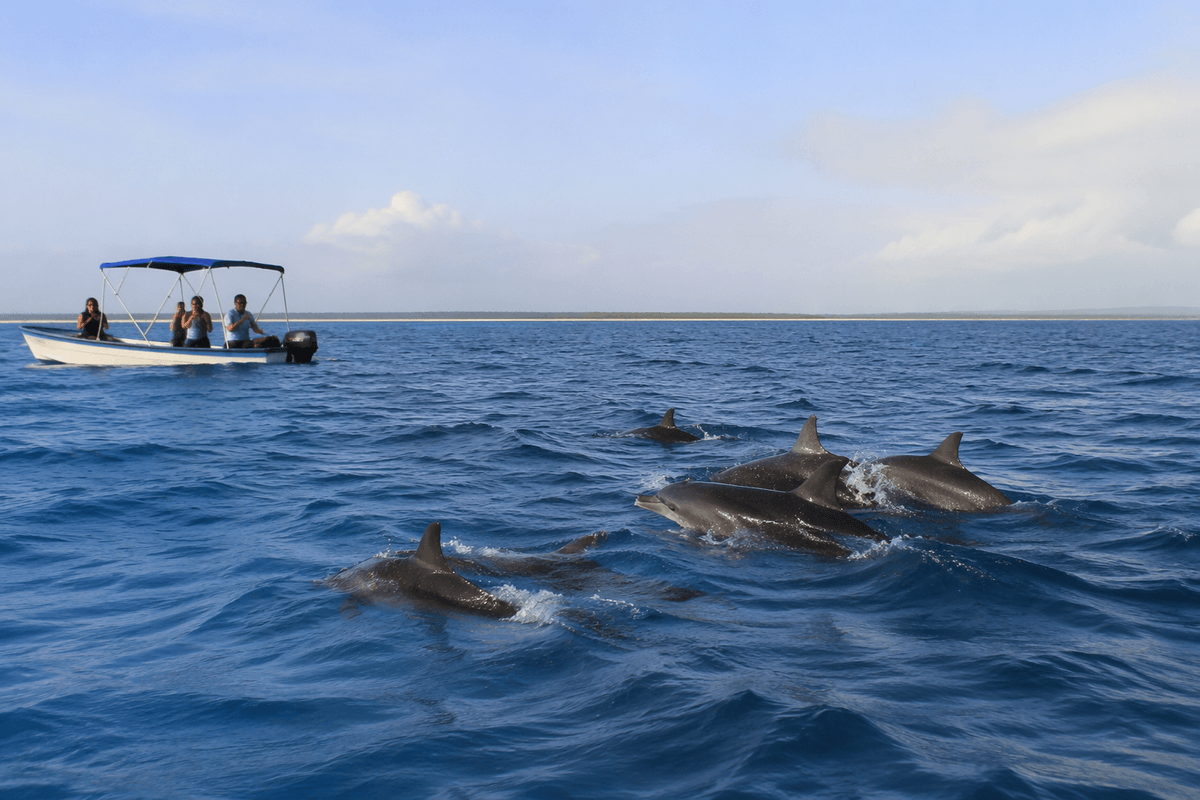
At 5:35 a.m., my alarm went off in Paje and I watched the pickup time slide in a WhatsApp message: “now now.” The van arrived ten minutes later already half-full, and we immediately started the familiar east-coast shuffle—stop for masks, stop for cash, stop for the last couple who “just need sunscreen.” I’d assumed a Mnemba day was basically boat + snorkel; the reality is it’s boat + timing, and you feel every extra transfer when you’re still salty from the day before.
For Days 8–10, treat Mnemba as your “booked early” anchor and let everything else orbit around it. If you’re based north (Nungwi/Kendwa), the trade-off is usually a shorter morning and less road time, which matters when the ocean is choppy and you’re trying not to start the day carsick. From the east (Paje/Jambiani), it can still be worth it, but only if you accept the friction: earlier pickups, more waiting, and more chances for the group to balloon into a crowd-flow mess on the beach.
Dolphins are the tricky add-on: the experience depends heavily on ethics and sea conditions, not just the brochure. If your operator is rushing the sightings or stacking boats, be willing to pivot to “reef-only + longer snorkel” instead—less adrenaline, more actual water time. By Day 10, you’re choosing between one more early start or finally sleeping in, and that decision quietly sets your mood for the next leg.
Jozani, village life, slow afternoons (Days 11–13)
At 9:18 a.m., I zipped my daypack in the shade outside reception and watched two separate drivers message “5 minutes” at the same time. Jozani was supposed to be the easy nature break, but the real variable was coordination: who was picking me up, from where, and whether the “short stop” at a shop was baked into the price. Compared to a reef day, it’s less physically demanding—unless you let it sprawl into a full-day taxi loop.
For Days 11–13, I like Jozani as a half-day (leave after breakfast, be back for a late lunch) so you keep an actual slow afternoon. Go earlier if you want cooler boardwalk time and fewer clustered photo stops; go later if you’re not a morning person, but expect thicker humidity and more tour groups arriving in waves. The trade-off is simple: a private car is cleaner and faster for couples, while solo travelers do better piggybacking on a shared trip—cheaper, but you lose control of pacing and detours.
Use the “village life” part intentionally instead of accidentally: pick one grounded add-on (a seaweed farm visit on the east, or a quieter inland stop if you’re repositioning bases) and skip the rest. By Day 13, I’d protect at least one unbooked afternoon—laundry, a long coffee, an early sunset seat—because squeezing in one more activity usually costs more in transit time than it returns in memories.
What I’d do on Day 14
On Day 14, I’d set an alarm even if I didn’t want to, because checkout clocks don’t care that you finally found a rhythm. At 8:40 a.m., with sunscreen still streaky on my forearm, I’d message my driver and confirm the airport time in writing—pickup, price, and whether it includes waiting. The last day is when “it’ll be fine” turns into the most expensive taxi you take.
If your flight is late afternoon or evening, I’d treat the morning like a controlled bonus round: one last swim where water access is predictable (north is easier for this than the east), then a shower and a real lunch—not a rushed snack you eat standing up. The trade-off is simple: squeezing in a final tour buys excitement but risks arriving sweaty, sunburned, and stressed, which doesn’t work if you’re prone to travel-day fatigue.
If you’re already near Stone Town (or you have an early flight), I’d pivot to a low-friction finish: coffee, a short wander for gifts you actually want to carry, then a calm early transfer before traffic thickens. Couples can justify a private car for certainty; solo travelers can save with shared rides, but you’re gambling your timing on strangers’ packing habits. My cue would be this: leave Zanzibar with one unhurried hour, even if it costs you one last beach photo.

![8 Best Investments for Beginners [Build a Diversified Portfolio]](static/image/2026/07/21/881dac31-767e-43de-be06-48a2f9750981.png)