Montenegro is small; choices still overwhelm
On the map, Montenegro looks like a weekend side quest. Then you start pinning Kotor, Budva beaches, Lake Skadar wine, and Durmitor hikes—and your “simple” week collapses into a dozen day trips.
Mountain roads are slow, summer traffic chokes the bay, and buses don’t always match your remote-worker tolerance for wasted hours. The first decision is what you’re willing to skip without regret.
Pick your home bases: coast or bay
I hesitated over one deceptively small choice: do you sleep “on the coast” or “in the bay”? On paper they’re close; in real life, one clogged stretch of road can decide whether you’re eating grilled squid at 9pm or staring at a bus timetable. For a first 7-day trip, two home bases is the sweet spot—enough variety, not so much packing that you lose daylight to check-ins.
If you want the postcard feeling with maximum payoff per hour, base in the Bay of Kotor (Kotor town if you like walking everywhere; Dobrota or Perast if you want calmer evenings). The bay is absurdly scenic, and the logistics are forgiving: short boat rides, easy sunset plans, and you can do the fortress climb early before cruise crowds peak. The downside is also obvious: the bay is a funnel. When traffic jams, everything feels like it’s happening in one narrow corridor, and mid-range rooms get expensive fast.
Budva and the open coast are the “more beach, less patience” option. You’ll get more swimmable water and a wider spread of restaurants, but the vibe can skew louder and more touristy—great if you want nightlife, less great if you’re trying to avoid traps. A practical compromise I kept coming back to: sleep bay-side, day-trip the coast (or vice versa) rather than bouncing every night. In a week, stability is a feature, not a sacrifice.
Map a 5–10 day loop
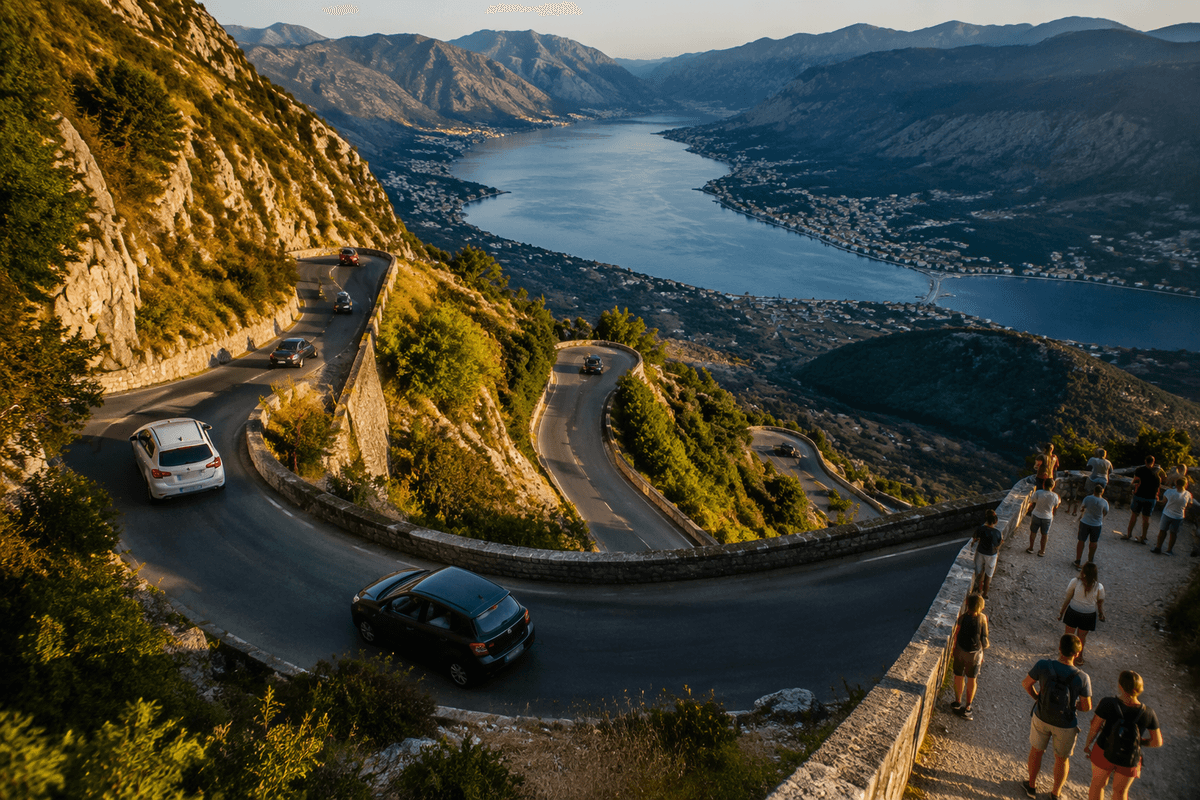
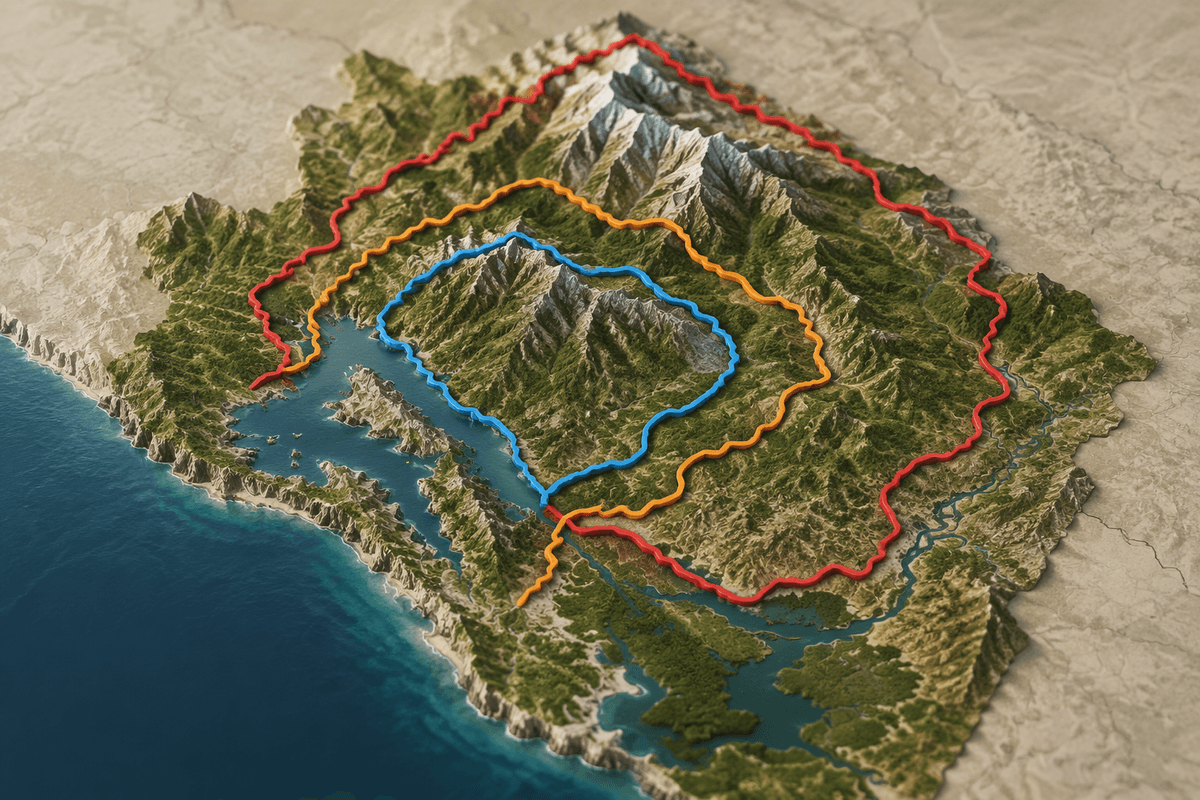
The moment you start drawing a loop, Montenegro stops being “small” and becomes “slow.” The bay-to-mountains jump is the one that looks harmless on Google Maps and then eats a chunk of your day in real life—hairpins, summer traffic, and that one scenic pull-off you didn’t plan for but will absolutely stop at.
For a clean 7-day first trip, I’d map it as a two-anchor loop: 3–4 nights Bay of Kotor → 2–3 nights Durmitor (Žabljak) → 1 night near the airport (Podgorica or Tivat area) if your flight timing is awkward. The bay gives you the “maximum scenery per minimal effort” days (boat to Perast, early Kotor fortress, a lazy afternoon in Dobrota). Durmitor is where the week feels bigger—Black Lake at dusk works even if you’re not a hardcore hiker, but the weather can flip fast and trails can be muddy after storms, so it’s not the place to arrive exhausted at 6pm and hope to “fit in a hike.”
If you only have 5 days, I’d skip Durmitor and do a tighter coastal loop: bay base + one overnight on the open coast (Budva or Petrovac) or a Lake Skadar day. You’ll lose the alpine contrast, but you’ll gain time and reduce the “transit hangover” that makes remote-work travel feel like you’re always recovering.
If you have 10 days, then the loop becomes worth expanding: add Lake Skadar as a deliberate stop between mountains and coast (wine + water + slower pace), and give yourself at least one “buffer” day for either traffic or weather. The practical takeaway: plan the loop around one big transfer day, not three medium ones—packing less often is how you end up eating well and seeing more.
Get around: car, bus, boat
The first time I priced out transport, I had that classic Montenegro whiplash: the rental car looked “fine” until I added parking, fuel, and the mental tax of bay traffic. Then the bus looked “cheap” until I realized the timetable didn’t care that I wanted a sunrise hike and a late dinner. Your week gets easier when you pick one default mode and accept its limitations instead of trying to optimize every single leg.
Car is the cleanest solution for the bay → Durmitor jump and for any day where you want viewpoints, farm restaurants, or flexible stops. The trade-off is stress where you least want it: Kotor and Budva parking can turn into a daily mini-quest, and the narrow roads are slow even when they’re technically “short.” If you hate driving, a compromise that works surprisingly well is: stay car-free in the bay, then rent a car only for the mountain portion (or for the one transfer day plus a buffer day).
Buses are workable for straightforward city-to-city moves (Kotor/Budva/Podgorica/Žabljak), but they reward patience: you plan around departures, not vibes. I’d use them when the alternative is paying for a car that mostly sits parked. Just don’t stack a bus ride and a “big” activity on the same day unless it’s something low-commitment like a Black Lake loop.
Boats are the bay’s cheat code. A short ride to Perast or a loop that includes Our Lady of the Rocks can feel like a full day without the traffic grind—best value when roads are congested and you want scenery with minimal effort. The only catch is timing: boats make the most sense mid-day when the fortress climb is too hot and the bay roads are at their worst.
The easiest first-trip itinerary and pitfalls
By day three, the temptation is to “just squeeze in” Budva, Skadar, and a mountain viewpoint before dinner—because everything looks close. This is where Montenegro quietly punishes optimism: one late start, one parking failure in Kotor, one slow lunch you don’t want to rush, and your whole plan becomes a sequence of compromises. The easiest first trip is the one that assumes friction and still works.
For a realistic 7-day rhythm: Days 1–3: Bay of Kotor base (one early fortress morning, one boat/Perast day, one flexible coast day if you’re curious), Day 4: transfer to Žabljak with a deliberate lunch stop and no “big hike” planned, Days 5–6: Durmitor (Black Lake loop as your guaranteed win + one longer hike only if the forecast is stable), Day 7: return toward Tivat/Podgorica with an easy final dinner and zero heroics. If you’re bus-only, keep the same structure but downgrade Day 4 and Day 7 into “move + short walk” days—trying to stack transit and a headline activity is how you end up seeing less and paying more for tours out of panic.
The common pitfalls are boring but expensive: switching hotels too often, planning dinners across the bay in peak traffic, and treating Budva Old Town as “authentic” without checking where you’re eating (menus in five languages are a clue). The practical takeaway: pick one “must-do” per day, schedule it for the part of the day with the least friction (early for Kotor, mid-day for boats, weather-aware for Durmitor), and let the rest be food and wandering—because that’s the part you’ll actually remember.


![8 Best Investments for Beginners [Build a Diversified Portfolio]](static/image/2026/07/21/881dac31-767e-43de-be06-48a2f9750981.png)