Guadalajara’s Día de los Muertos: what visitors expect vs reality
I landed expecting a single, citywide “Día de los Muertos moment”—a parade route, a main stage, one obvious place to be. Guadalajara doesn’t really work like that. You’ll find pockets of celebration that feel intimate and moving, but they’re scattered, and the most “Instagrammable” setups are often the most managed (great for photos, less great if you’re chasing something that feels unproduced).
The reality is more modular: altars in plazas and cultural venues, performances that run on a schedule, and cemetery visits that can feel profound or uncomfortable depending on how you show up. If you want easy logistics and a clear program, you’ll gravitate toward organized events—just expect crowds and a bit of staging. If you want quieter, more personal encounters, you’ll trade convenience for uncertainty (and you’ll need to be more thoughtful about timing, transport at night, and when it’s better to simply observe).
What the celebration means in Jalisco (quick cultural grounding)
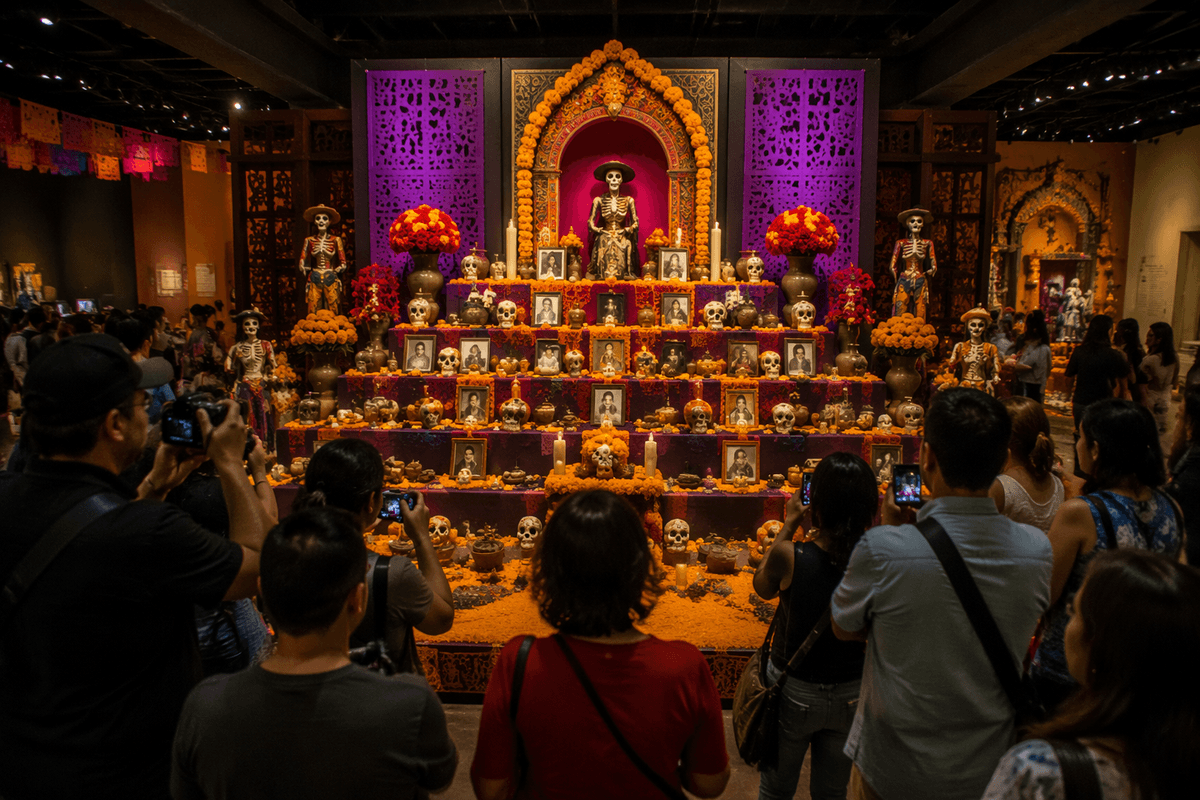
The first time I saw an altar in Guadalajara, what struck me wasn’t the spectacle—it was the specificity: a particular brand of candy, a favorite drink, a photo that clearly wasn’t chosen for aesthetics. In Jalisco, Día de los Muertos tends to read less like a citywide party and more like a layered practice that moves between home, neighborhood, and public space. That’s useful to know because the most polished displays (museums, big plazas) can be beautiful and still feel a step removed from the private “ofrenda” logic that makes the day land emotionally.
It also helps set expectations around cemeteries: you’re not arriving to “watch” so much as entering a space where people may be actively visiting and maintaining bonds. If you want something legible and visitor-friendly, cultural venues translate the symbolism for you—labels, programming, clear hours—but you’ll share the moment with a lot of cameras. If you want something quieter, you’ll need more restraint (and often earlier timing), because once night hits, the vibe can shift from reflective to crowded fast.
The grounding question I kept returning to was simple: am I participating in a public commemoration, or am I standing near someone’s grief? Your choices get easier—and more respectful—once you decide that first.
Where to experience it: plazas, cemeteries, cultural venues
The easiest “plug-in” experience is the Centro: Plaza de Armas, Plaza Liberación, and the stretch by Teatro Degollado tend to collect public altars and programming because they’re walkable and obvious. That convenience is real—you can bounce between displays and food without thinking too hard—but it also means you’re rarely alone with anything. If you’re trying to avoid the feeling of moving through a photo set, go earlier in the evening (or even late afternoon) when families are still circulating and the crowd hasn’t turned into a bottleneck around the most elaborate ofrendas.
Cemeteries are where your decision-making matters most. Panteón de Belén (the historic cemetery) is often the most “visitor-legible,” but that also makes it feel more curated, and it’s not the same as being in a neighborhood pantheon where people are actively visiting loved ones. If you do go to a working cemetery, treat it like you’re entering someone else’s ritual: stay on paths, keep your voice down, and don’t assume night is the “right” time—after dark, transport and personal safety get trickier, and the mood can shift fast if it gets crowded.
For structure without awkwardness, cultural venues like Hospicio Cabañas and nearby museums are the cleanest option: posted hours, signage, and performances that start when they say they will. You give up spontaneity, but you gain clarity—especially if you’re balancing 4–6 days and don’t want every evening to hinge on guesswork.
What to do and eat: altars, pan de muerto, performances
I kept underestimating how much Día de los Muertos in Guadalajara runs on “micro-moments” rather than one headline event—so I started choosing just one anchor each evening: an altar circuit or a performance or a food stop. The Centro altars are the most efficient: you can walk between them, take in the symbolism without needing an invitation, and leave when the crowd thickens. What doesn’t work as well is trying to see every display at peak hour; by 8–9 p.m., the best ofrendas turn into slow-moving lines of phones and elbows, and you stop noticing details.
Pan de muerto is the easiest “participation” that doesn’t feel intrusive, but it’s also where timing matters. The good versions sell early, especially around Nov 1–2, and the most famous panaderías can mean a long wait for a loaf you’ll end up eating on a curb. If you’re mid-range and don’t want to burn an hour in line, buy in late afternoon, then treat it like your walking snack while you altar-hop.
For performances, I preferred venues with posted start times (think cultural spaces near the Centro) because street programming can slide or get swallowed by sound from three directions. Ticketed shows cost more, but you actually get to hear the music and see the dance—whereas free plaza stages are fun until the crowd turns it into a standing-room scrum.
Etiquette, safety, and photography: how not to intrude
The first time I lifted my phone for a photo, I caught myself doing the “tourist lean” toward an ofrenda—half a step closer, half a second too long. In plazas, nobody’s going to scold you, but the most respectful rhythm is quick: look, read what you can, take one wide shot, then move so others (including families) can approach without negotiating your camera. If you want detail shots—candles, papel picado, names—wait for a lull or come earlier, because forcing that close-up at peak hour is exactly how public displays start feeling like a set.
Cemeteries are the line you don’t want to blur. If people are actively tending graves, skip flash entirely, keep your distance, and don’t photograph faces unless someone clearly indicates it’s okay. Even if it’s “allowed,” it can land badly—especially when you’re capturing a private moment that wasn’t meant to be shared. I found it helped to treat the visit like a museum with no labels: observe quietly, don’t wander into family clusters, and leave before fatigue makes you careless.
For safety, the friction point is night transport. Centro is walkable until it isn’t—when crowds thin, you’re suddenly on a dim block with your phone out. If you’re staying farther out, decide your ride plan before you arrive (and keep it boring: direct pickup, minimal street-side scrolling), even if it means leaving 20 minutes earlier than you want.
Planning basics: timing, crowds, transport, day trips
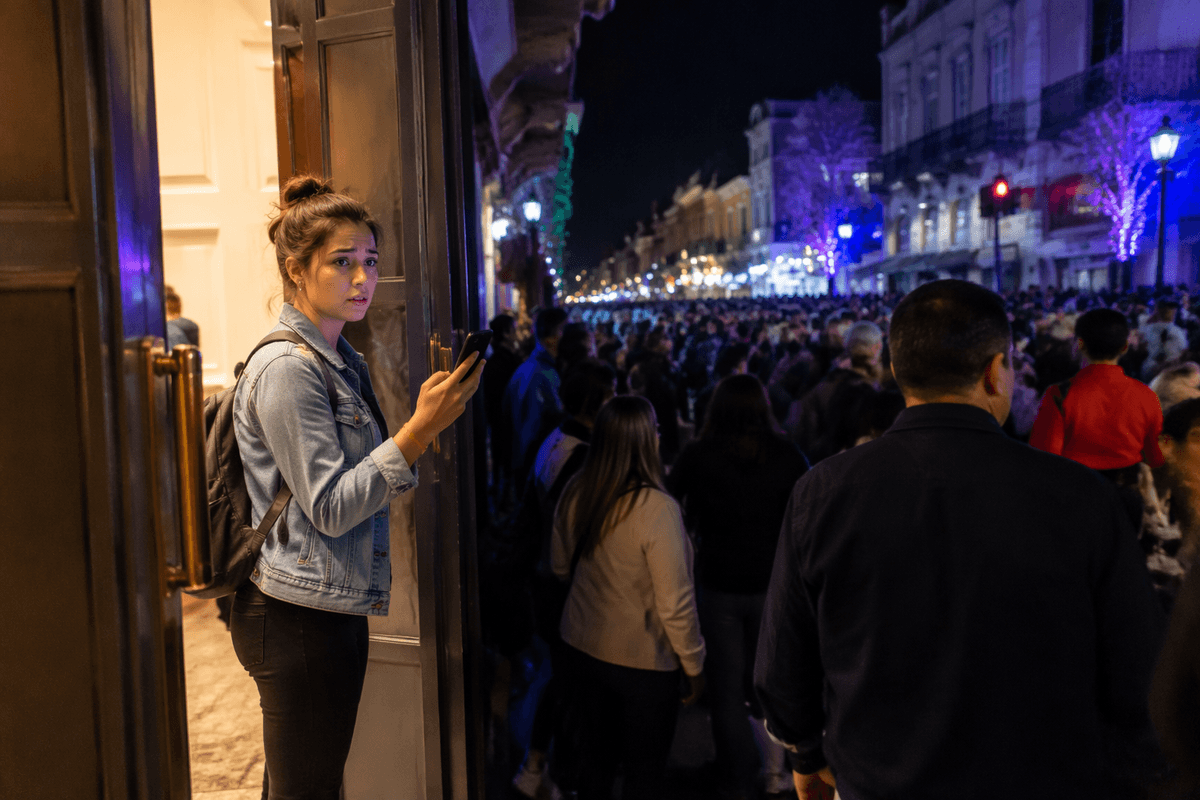
On Nov 1–2, I learned to plan Guadalajara like a city of overlapping time windows, not a single “main event.” Late afternoon is the sweet spot for altars: light is decent, the mood is still family-forward, and you’re not yet trapped in the 8–10 p.m. shoulder-to-shoulder surge. If you only get one “night” to push later, make it the evening you’re willing to keep simple—one plaza circuit, then an early exit—because trying to stack dinner, a performance, and a cemetery visit usually turns into rushed choices and sloppy etiquette.
Where to stay comes down to friction tolerance. Centro/Centro Histórico is the most efficient for walking between displays, but it’s louder, pricier during peak dates, and you’ll feel the crowd pressure outside your door. Colonia Americana (Lafayette/Chapultepec area) buys you better restaurants and a calmer base, but you’ll spend more on rides and you have to commit to a “leave time” instead of wandering until you’re tired.
For transport at night, I treated rideshares like a reservation: request from a well-lit doorway, not the curb in a crush, and don’t assume signal will cooperate when everyone’s doing the same. Day trips can work if you’re here 5–6 days: Tlaquepaque is the low-effort win (short distance, easy to bail if it feels too touristy), while Tequila is longer and more scheduled—worth it if you want structure, annoying if you’re trying to stay flexible around Nov 1–2.
Leaving with meaning: choosing your own way to participate
On my last evening, I stopped trying to “cover” Día de los Muertos and instead picked one small, deliberate participation: a slow altar loop, one pan de muerto, and then leaving before I hit the tired, restless version of myself who starts treating everything like content. It felt almost too modest—until I realized how much better I remembered the details when I wasn’t sprinting between moments.
If you’re unsure what’s authentic, choose your lane and commit: either the visitor-friendly clarity of posted programming, or the quieter approach of observing and moving on when a space feels private. The only wrong plan is the one that makes you push past your own boundaries. When you’re deciding in real time, use a simple cue: if you can’t be respectful at the pace the moment requires, it’s time to step back.



![8 Best Investments for Beginners [Build a Diversified Portfolio]](static/image/2026/07/21/881dac31-767e-43de-be06-48a2f9750981.png)