Choosing a base in Singapore: why it matters
I realized Singapore hotel maps lie a little: two pins can look “downtown-adjacent,” yet one puts you ten calm minutes from dinner and the other has you negotiating underpasses, humidity, and a Grab queue at 11 p.m. On a 4–6 day first trip, your base quietly decides whether you stroll out for kaya toast and a hawker dinner, or you keep retreating to the room because getting “back out” feels like another errand.
The practical constraint is time, not distance. Marina Bay is unbeatable for postcard views, but you pay for it and the area can feel oddly empty once office crowds thin. Orchard is easy and comfortable (especially if you’re shopping), yet it’s less atmospheric at night unless you like malls. Chinatown/Clarke Quay/Bugis tend to win on food density and late options, though rooms can be smaller and street noise is real. MRT makes most commutes painless—until you’re sweaty, carrying bags, or trying to squeeze in “one last snack” after midnight.
Quick fit check: sights, vibe, budget, commute
The moment you start comparing hotels, do a quick reality check with your own day: are you actually going to “pop back” for a shower before dinner, or will you crash once you’re in? If you want the classic skyline and you’re the type who’ll wake up early for photos, Marina Bay keeps things effortless—but it also locks you into the highest nightly rates and a quieter street scene once the lights go down.
If your priority is eating well without planning, shortlist areas where food is a five-minute walk, not a two-stop MRT decision. Chinatown/Clarke Quay/Bugis usually win here, with the friction being smaller rooms and occasional noise (especially if your window faces a bar-heavy street). Orchard/River Valley is the “smooth commute” pick—big hotels, easy Grab pickups, lots of air-conditioning—yet it can feel like you’re traveling between malls rather than neighborhoods.
For commute sanity, anchor yourself near an MRT interchange (or at least a line that connects cleanly). Transfers aren’t hard, but they add invisible time when you’re doing it twice a day in humidity, or when you’re coming back late and just want the shortest path to bed.
Marina Bay & Downtown: iconic views, premium prices
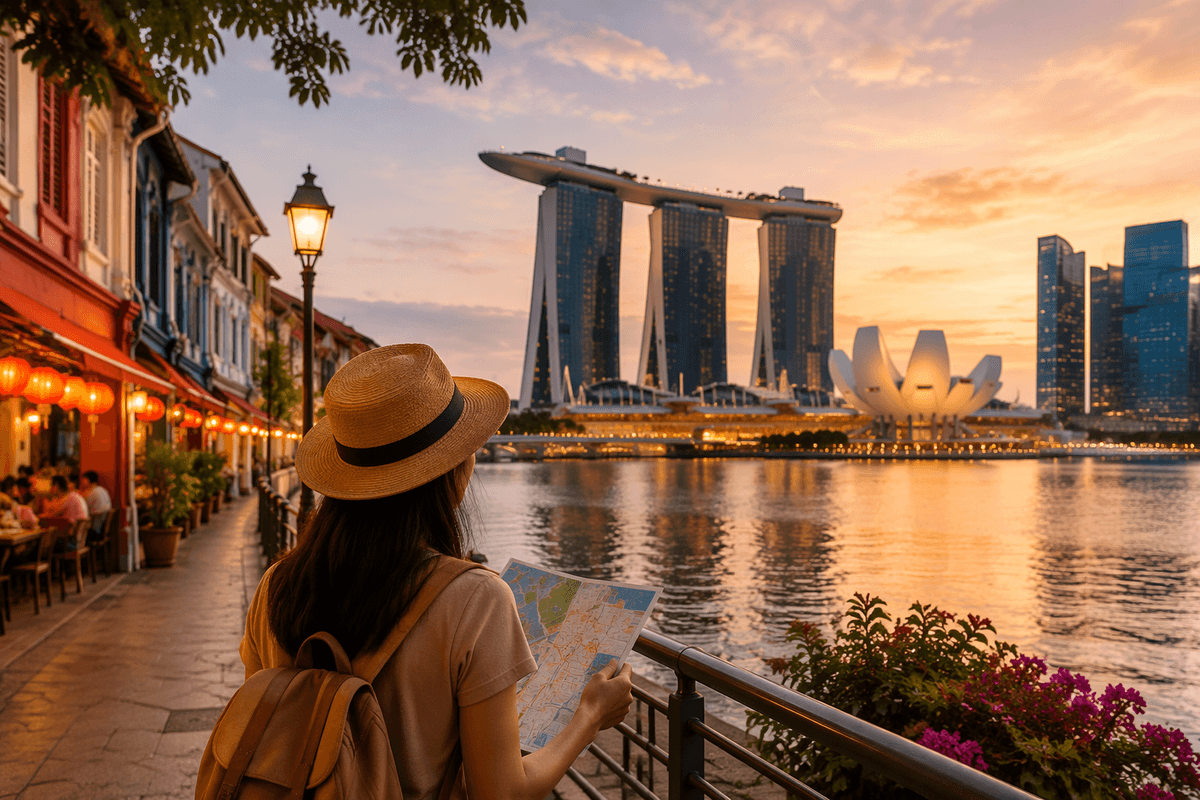
I hesitated at Marina Bay because it’s the one part of Singapore where you can “accidentally” do something iconic on the way to breakfast—then I looked at hotel rates and immediately started negotiating with my own budget. Staying here makes the skyline feel like it belongs to your trip, not just a timed stop: sunrise walks around the bay, an easy pop-in to Gardens by the Bay, and a smooth, mostly sheltered route network that matters more than it sounds once the heat kicks up.
But the street-level vibe is more polished than lively. After the dinner rush, Downtown can go quiet fast—great if you want clean, calm nights, less great if you like wandering until you stumble into a hawker center. Food exists, but it’s easier to end up in “nice but pricey” mode unless you’re willing to MRT a couple stops for density and variety.
If you choose Marina Bay, pick a hotel within a short, direct walk of an MRT station (City Hall/Esplanade/Promenade/Raffles Place are the practical anchors) and accept that you’re paying for convenience and views, not neighborhood texture. It works best when you’re using early mornings and late evenings; in the middle of the day, you’ll likely retreat indoors like everyone else.
Orchard & River Valley: shopping, comfort, easy transit
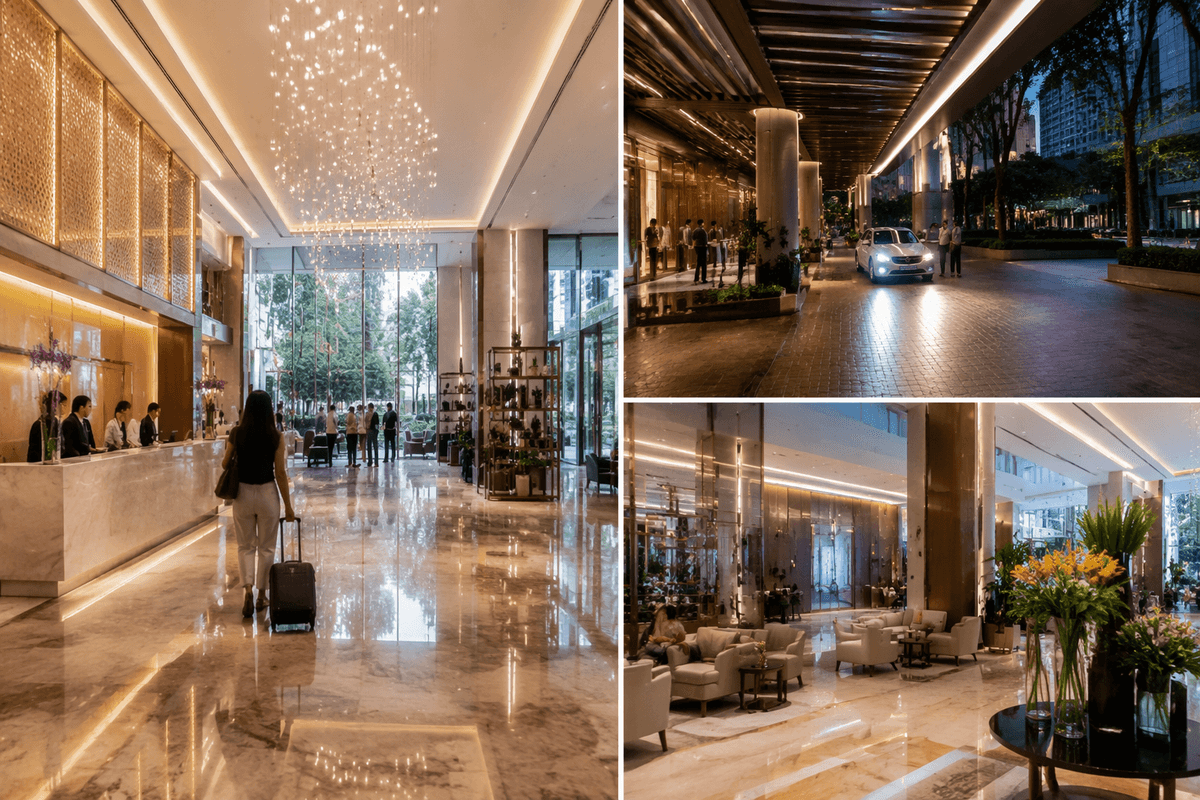
I felt the Orchard pull the first time I tried to “just cool down for a minute” and realized I could walk from the MRT into a mall, into a café, into another mall, and barely see the weather. If you’re arriving with luggage, planning to shop, or you simply like the predictability of big hotels, Orchard and nearby River Valley are the least fussy bases—easy Grab pickups, wide sidewalks, and enough infrastructure that a tired night doesn’t become a logistics puzzle.
The comfort comes with a personality tax. Orchard at street level can feel like you’re commuting between retail nodes rather than discovering a neighborhood, and late-night wandering is more subdued unless you aim yourself toward Somerset/Plaza Singapura edges or drift down toward Robertson Quay. River Valley softens this with a calmer, slightly more residential feel and better “casual dinner” options, but it can also mean a longer walk to the MRT depending on your exact address—fine at 6 p.m., less charming when you’re sweaty at 11.
Choose this area if your trip rhythm includes mid-day resets (shopping, showers, naps) and you value smooth transit over atmosphere. If “Singapore nights” are a priority, you may end up spending more time commuting out for energy than you expected.
Chinatown, Clarke Quay, Bugis: culture, food, value
The first night I based myself near Chinatown, I realized how little planning I needed: I walked out intending to “find dinner” and immediately had too many good options within a few blocks. That’s the core appeal of Chinatown/Clarke Quay/Bugis for a 4–6 day trip—you can spend your daylight on the headline sights, then let food and street life fill the gaps without a spreadsheet. The catch is that the same density that makes it fun can make hotels feel tighter: smaller rooms, thinner walls, and the occasional whiff of nightlife when you’re trying to sleep early.
Chinatown is the most “Singapore-in-one-frame” feeling base—heritage shophouses, temples, and hawker access—while still being MRT-practical for bouncing to Marina Bay or Orchard. Clarke Quay swings the other direction: it’s easy to go out late, but you’re paying for proximity to bars, and noise is a real variable depending on which street your room faces. Bugis is the value-leaning middle ground: plenty to eat, solid MRT connectivity, and generally less nightlife spillover, though it can feel more transactional than atmospheric once you drift away from the historic core.
If you want convenience with character, I’d start by looking near Chinatown MRT or Bugis MRT and only choose Clarke Quay if late nights are a deliberate priority—not an accident you’ll regret at 1 a.m.
Sentosa & East Coast: resort feel, slower sightseeing
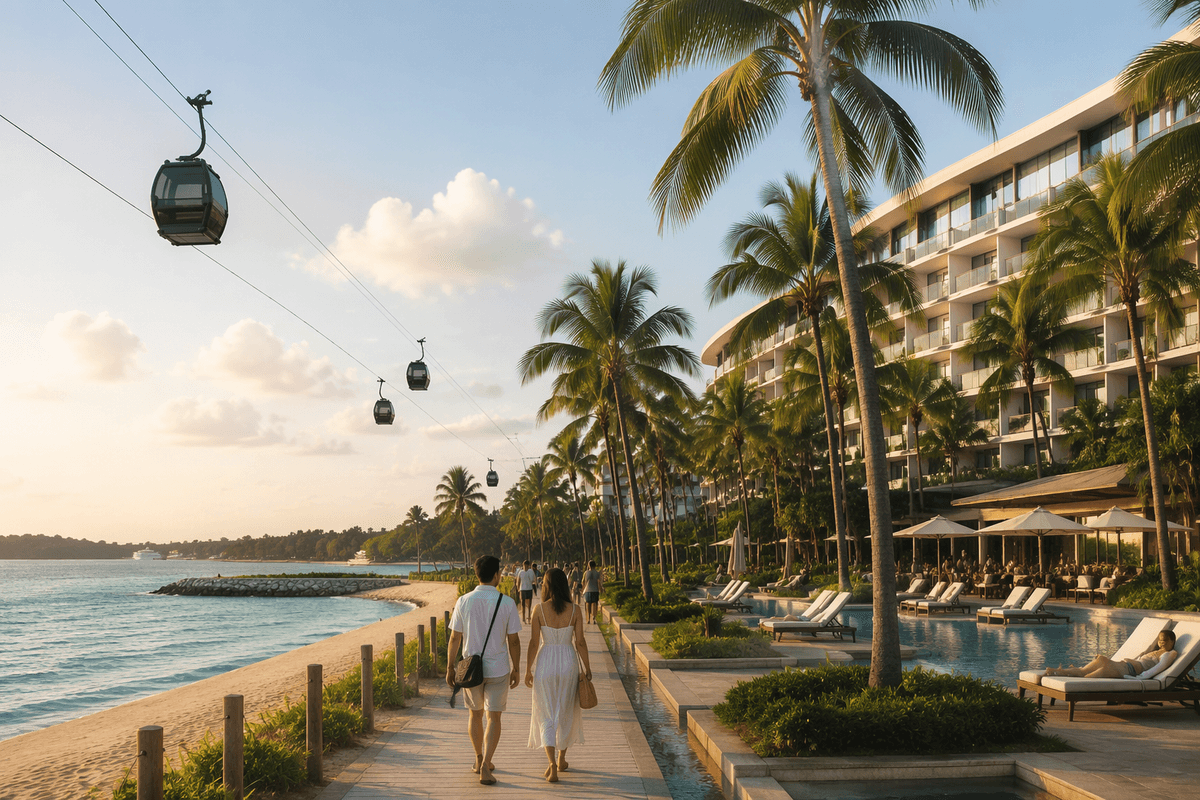
I almost booked Sentosa because the idea of stepping out into “vacation mode” sounded perfect—until I mapped how often I’d be going back to Marina Bay, Chinatown, and Bugis. Sentosa works when your trip goal is downtime first (pool, beach walk, one big attraction per day), but it’s a slower base for a first-timer who wants to casually stack sights. Even with the Sentosa Express/cable car, you’ll feel the extra hop each time you decide to “just pop out” for dinner somewhere else, especially after dark when you’re tired and the humidity makes transfers feel longer.
The East Coast is a different kind of calm: more local, more spread out, and excellent if you want morning runs or sunset cycling by the coast. The friction is transit geometry—many hotels and rentals aren’t a quick MRT stroll, so you’ll lean on Grab more than you planned, and that can quietly inflate a mid-range budget. I’d choose East Coast if you’re happiest with one anchor plan a day (Gardens by the Bay in the afternoon, hawker dinner nearby), not if you’re chasing “max Singapore” with constant neighborhood-hopping.
Final pick: the best area for your trip style
Standing on a station platform at the end of a long, humid day, I mostly wanted one thing: a short, no-thinking route back to my hotel—and that’s the lens I’d use to choose your base. For a first 4–6 day trip on a mid-range budget, my default pick is Chinatown or Bugis: you get dense food options, walkable nights, and MRT access that doesn’t make every dinner feel like a “commute.” The limitation is hotel comfort—rooms skew smaller, and you’ll want to pay attention to reviews that mention soundproofing.
If your priority is iconic views and early-morning sightseeing, pay the premium and stay Marina Bay/Downtown, but don’t expect spontaneous late-night street energy. If you want maximum ease (bigger rooms, painless Grab pickups, shopping built-in), choose Orchard/River Valley and accept you’ll travel out for neighborhood texture. If you’re traveling with kids or you’re intentionally doing fewer sights, Sentosa/East Coast makes the trip feel slower—in a good way—but it’s the easiest place to underestimate how often you’ll end up booking “one more” Grab.